Why Every Printed QR Code Should Be Dynamic
A printed QR code is permanent, but the page it points to rarely is. Here is why dynamic QR codes save you from reprints, broken links and guesswork.



In this article05 sections
Picture this. You print 2,000 flyers for a launch event. A week later you notice the link in the QR code has a typo, or the landing page has moved, or the offer has ended. The flyers are already in people's hands.
With a static QR code, that is the end of the story. With a dynamic one, it is a two minute fix.
Static vs dynamic, in plain words
A static QR code stores the destination URL directly inside the pattern. What you encode is what you get, forever. It cannot be edited and it cannot tell you how many people scanned it.
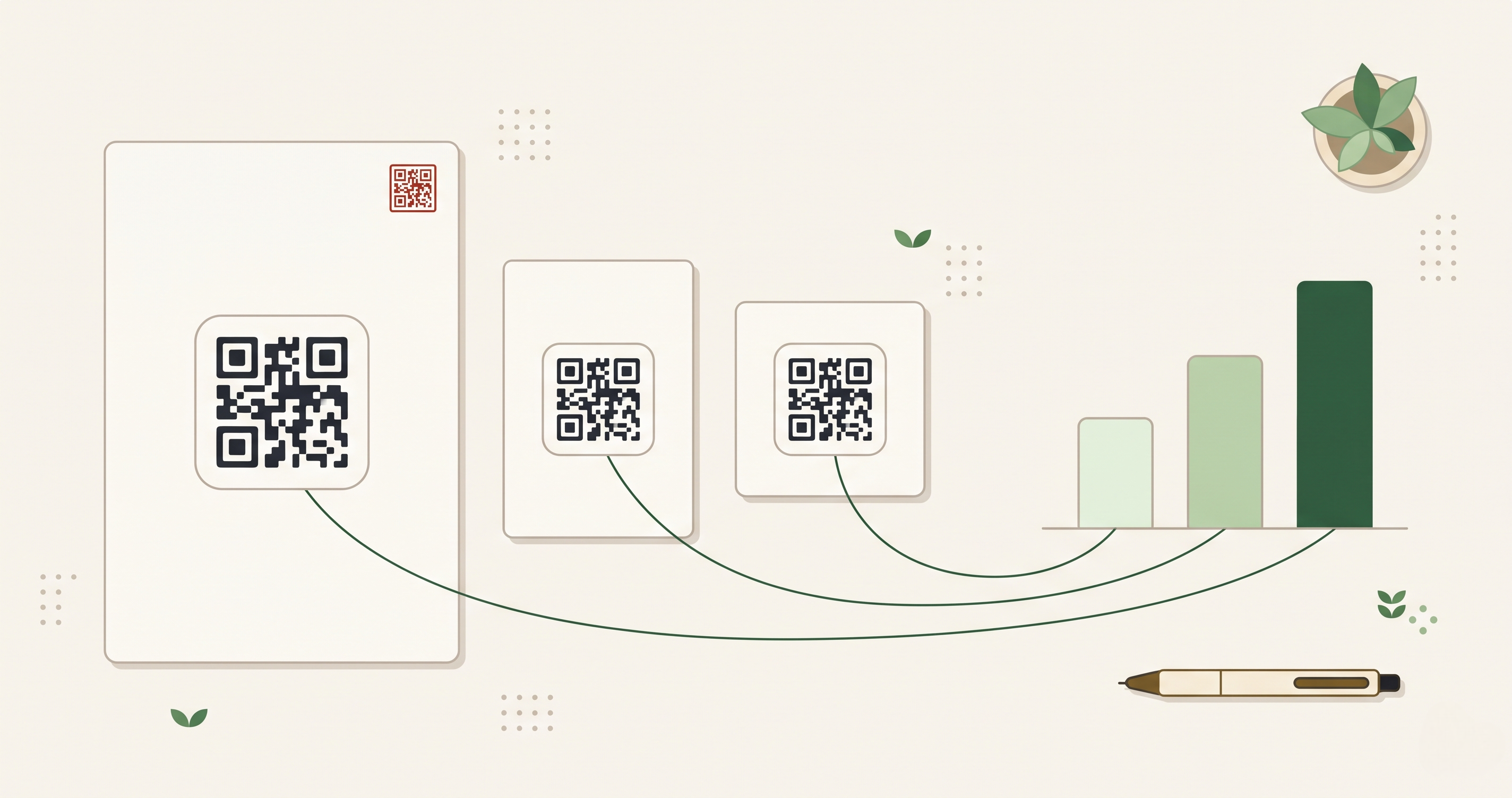
A dynamic QR code stores a short redirect address instead. When someone scans it, that address sends them to your real destination. Because the redirect lives on a server, you can change where it points whenever you like, and the printed code stays exactly the same.
Three moments when dynamic wins
1. You made a mistake. Typos in URLs, wrong campaign pages, a link pasted from the wrong tab. These happen to everyone. A dynamic code lets you correct the destination without touching the print run.
2. Your plans change. A seasonal menu becomes a new menu. A sale ends and you want scans to land on a "coming soon" page. A product page gets restructured. The code on the packaging or poster keeps working, and you decide where it leads.
3. You want to know what is working. A static code gives you nothing back. A dynamic code can show you scan counts, rough locations, devices and timing. If you put different codes on a poster, a flyer and a shelf talker, you finally learn which one people actually use.
What to check before you print
Before any QR code goes to the printer, run through this short list.
- Use a dynamic code for anything you cannot easily reprint: packaging, signage, brochures, event banners.
- Test it on two phones, one iPhone and one Android, in normal lighting.
- Print it large enough. A good rule of thumb is at least 2 cm by 2 cm, and bigger if people will scan from a distance.
- Keep strong contrast. Dark code on a light background scans most reliably.
- Leave a quiet border around the code so scanners can find its edges.
- Add a short call to action next to it, such as "Scan for the menu", so people know why they should bother.
When static is still fine
Static codes are perfectly good for things that never change and do not need tracking, like a Wi-Fi login on your own router or a contact card on your own business card. If you would be happy for the destination to stay frozen forever, static is simple and free of any dependency.
For everything else, flexibility is worth more than simplicity.
Start small
You do not need a big setup to try this. On you can start free with 3 dynamic QR codes and 25 short links, no credit card needed. Create one for your next flyer, scan it, change the destination, and scan it again. Seeing the same printed code open a different page is the quickest way to understand why dynamic matters.
What you print today should keep working tomorrow. A dynamic QR code is how you make sure it does.
Keep exploring